

A Simple Guide to Protecting Your Homeownership
Understand what title insurance is, what it protects and why it matters.
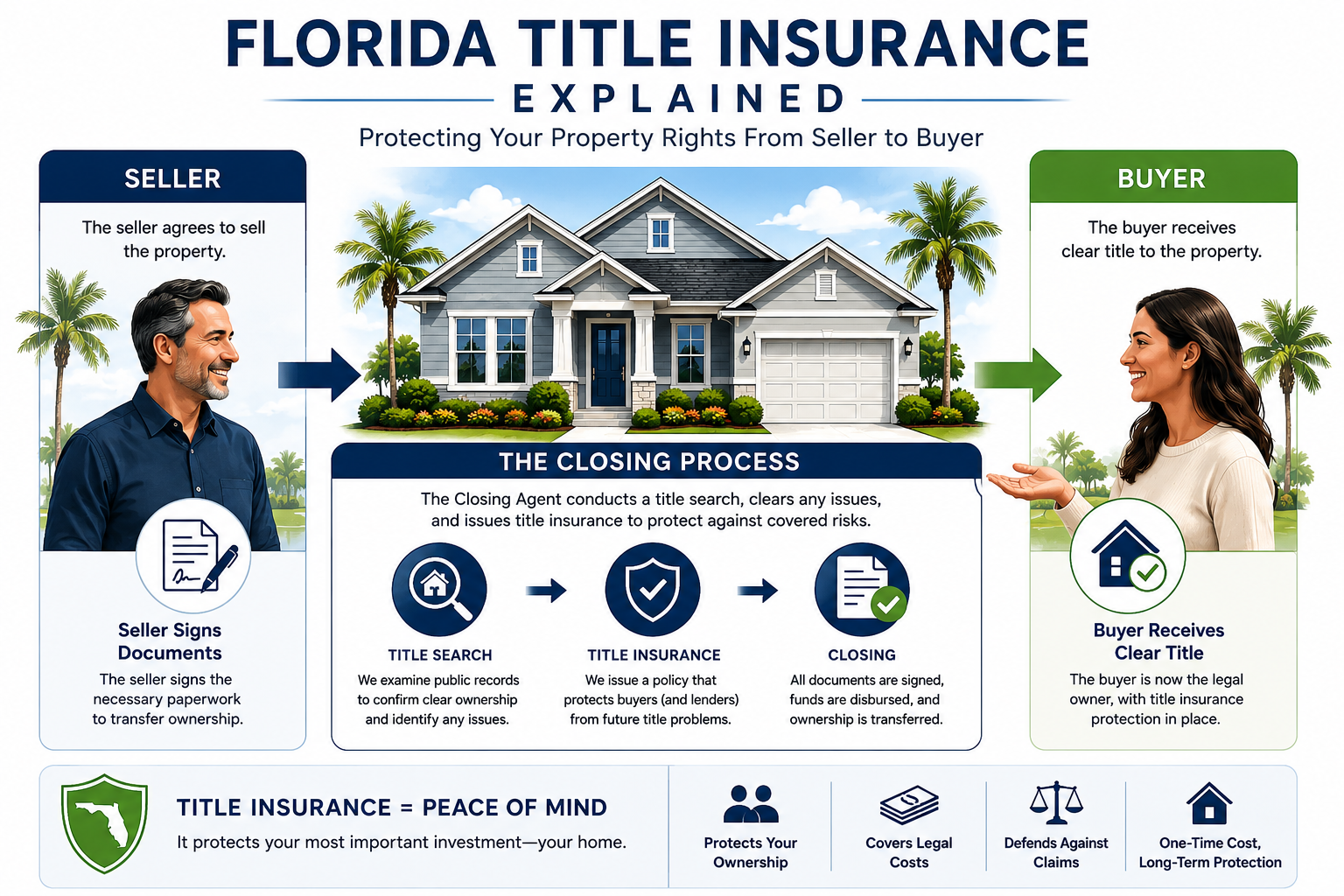
Buying a home is a major investment. Before you receive the keys, someone needs to confirm that the seller has the right to sell the property and that old liens, debts or ownership problems will not follow you after closing. That is where title work and title insurance come in.
First, What Does “Title” Mean?
Title is the legal right to own, use and transfer a property.
When you buy a home, the seller signs a deed that transfers ownership to you. But the deed alone does not prove that there are no old liens, unpaid debts, missing owners or mistakes connected to the property.
Title work helps confirm that the seller can properly transfer the property to the buyer.
What Is a Title Search?
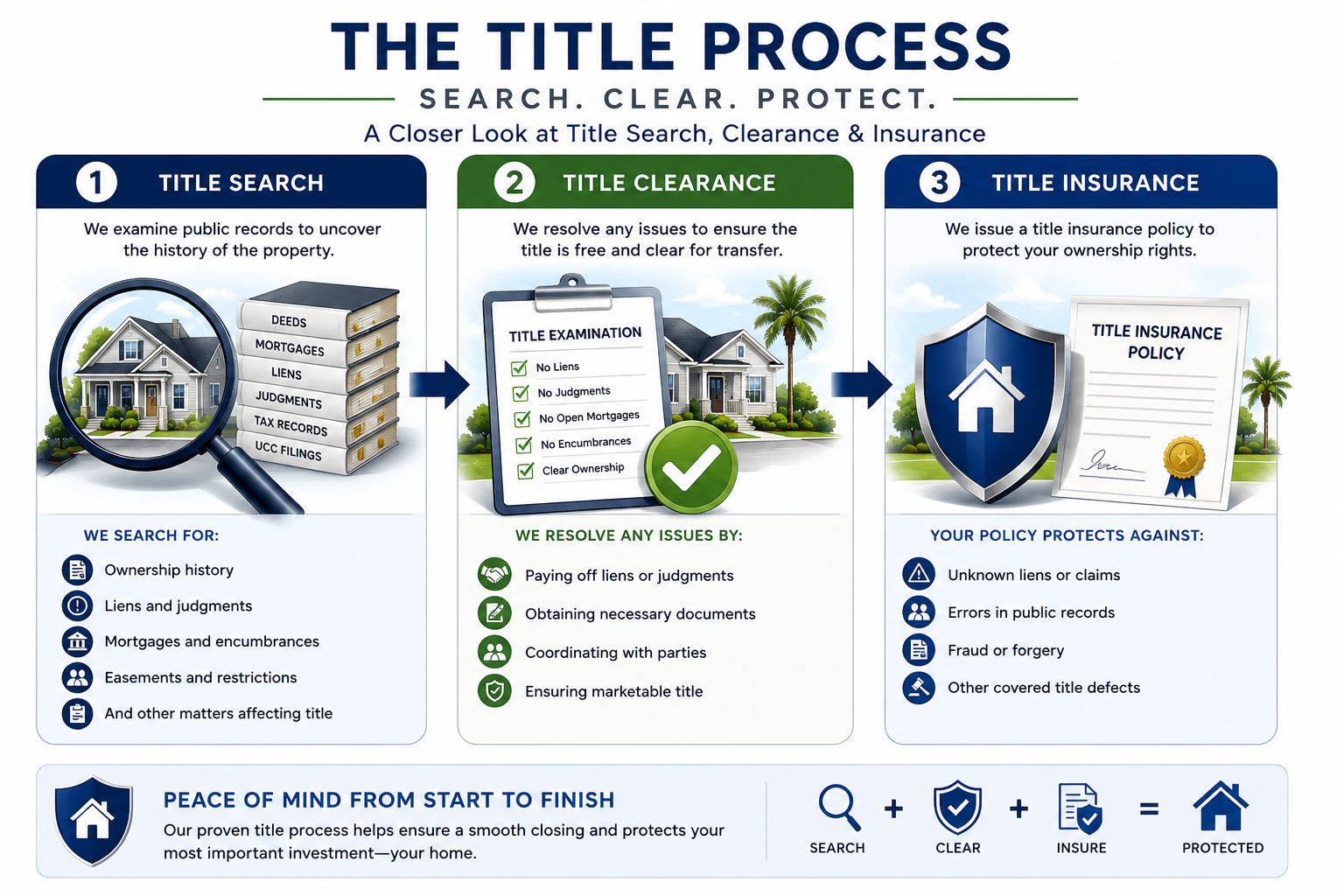
A title search is a review of public records connected to the property and the people who have owned it.
Ownership History
The title team reviews current and prior owners to confirm how the property was transferred over time.
Mortgages and Liens
Existing mortgages, judgments, unpaid taxes and other claims may need to be paid or resolved before closing.
Recorded Documents
Deeds, easements, restrictions and other records may affect ownership or how the property can be used.
Ownership Questions
Estate, divorce, trust or business-entity issues may affect who has authority to sell the property.
Title Requirements
The title team identifies the items that must be completed before title insurance can be issued.
Problem Resolution
Many title issues can be corrected through payoffs, releases, affidavits or other documents before the transaction closes.
How the Title Process Works
The title process helps move the property from the current owner to the buyer with fewer surprises.
Search Public Records
The title team reviews ownership, mortgages, liens and other recorded matters connected to the property.
Identify Title Issues
Any items that may prevent a clean transfer are listed as title requirements.
Resolve Requirements
Payoffs, releases, ownership documents and other items are collected or completed.
Issue Title Insurance
After closing and recording, the final title insurance policy is issued, subject to its terms and exceptions.
What Is Title Insurance?
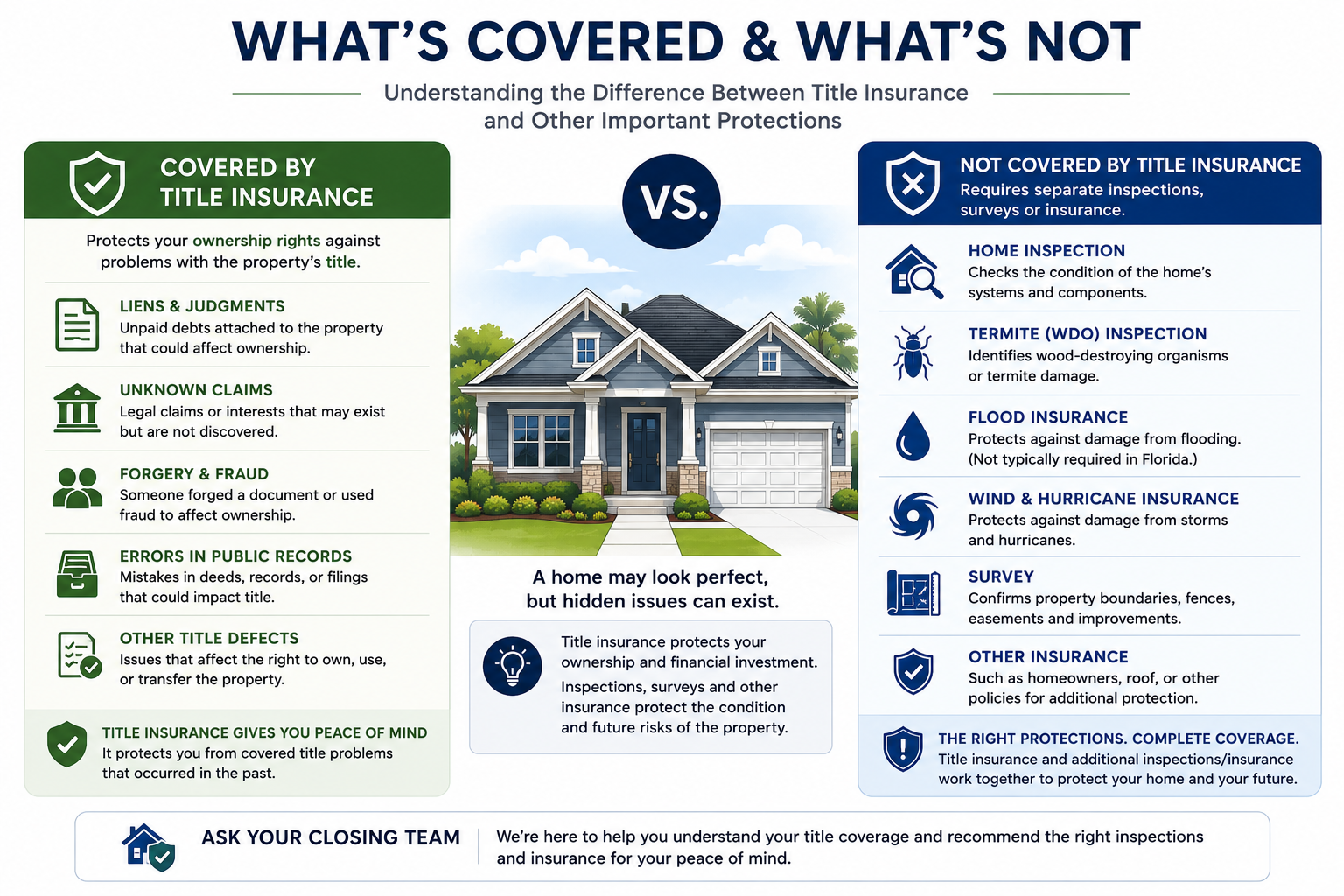
Title insurance helps protect against certain covered ownership problems connected to events that happened before the policy was issued.
Ownership Claims
Someone may claim they still own part of the property or that a prior transfer was not completed correctly.
Old Liens or Mortgages
A debt connected to a prior owner may appear after the buyer has completed the purchase.
Public Record Errors
A deed, mortgage release or other document may have been recorded incorrectly.
Forgery or Improper Signatures
A prior document may contain a forged signature or may not have been signed by the proper person.
Missing Heirs
An heir or other person may later claim an ownership interest in the property.
Covered Legal Defense
The title insurer may investigate and defend against certain covered claims, subject to the policy terms.
Title Insurance Is Not Homeowners Insurance
These policies protect against different kinds of risk.
Homeowners Insurance
Homeowners insurance generally protects the home against certain future events.
- Fire
- Storm damage
- Theft
- Certain accidents
- Property damage after purchase
Title Insurance
Title insurance generally protects against certain covered problems connected to the property’s past.
- Prior ownership claims
- Unreleased liens
- Recording mistakes
- Certain fraud or forgery
- Defective deeds or missing heirs
Two Main Types of Title Insurance
The owner and the mortgage lender need different types of protection.
Owner’s Title Insurance
An owner’s policy protects the buyer’s ownership interest, subject to the policy’s terms, conditions, exceptions and exclusions. It may help protect the homeowner if someone later makes a covered claim against the property.
Lender’s Title Insurance
A lender’s policy protects the mortgage lender, not the homeowner. It is commonly required when the buyer finances the purchase. A separate owner’s policy is needed to protect the buyer’s ownership interest.

A Simple Example
Imagine that you buy a home and move in. Six months later, someone claims that a former owner did not properly transfer their share of the property. Or an old contractor claims that a lien should have been paid before you purchased the home.
You may need to respond to the claim and pay legal costs yourself.
With an Owner’s PolicyThe title insurer may investigate and defend against a covered claim, subject to the terms of the policy.
What Title Insurance Usually Does Not Replace
Title insurance is important, but it does not protect against every possible property problem.
- A home inspection
- A property survey
- Homeowners or flood insurance
- Zoning and building-code review
- Legal or tax advice
- Problems created after the policy date
- Matters listed as exceptions in the policy
Who Pays for Title Insurance in Florida?
The purchase contract usually determines who pays for the owner’s title insurance policy and who selects the title or closing company.
Local Customs Can Differ
In some Florida markets, the seller commonly pays. In other areas, the buyer may pay. The written contract should control the responsibilities for your transaction.
Review the Contract
Avoid assuming that the buyer or seller always pays. Your REALTOR®, lender, title professional or attorney can help explain what the contract says.
Frequently Asked Questions
What is title insurance?
Title insurance protects an owner or lender against certain covered title defects, liens and ownership claims connected to events that happened before the policy date.
Is owner’s title insurance required in Florida?
An owner’s policy is generally optional, but it is commonly recommended because it protects the buyer’s ownership interest.
Is lender’s title insurance required?
A mortgage lender will commonly require a lender’s title policy as a condition of the loan. That policy protects the lender, not the buyer.
Do I need both an owner’s policy and a lender’s policy?
The lender’s policy protects only the mortgage lender. An owner’s policy protects the buyer’s ownership interest. Buyers using financing commonly see both policies at closing.
How long does an owner’s policy last?
An owner’s policy generally continues while the insured owner retains an interest in the property, subject to the policy terms and conditions.
When do I receive the title insurance policy?
The title commitment is usually provided before closing. The final policy is issued after the required closing documents have been recorded and the final title requirements are completed.
Can a title search find every possible problem?
A careful title search finds many recorded issues, but some risks may not appear clearly in public records. Title insurance is intended to protect against certain covered problems discovered after closing.
How much does title insurance cost?
The premium is generally based on the purchase price or loan amount. Total closing costs may also include settlement, search, recording, tax, endorsement and transaction-specific charges.
Protect Your Ownership From the Start
Title insurance is more than another closing charge. It helps protect the legal ownership behind one of your largest investments. Let The Closing Agent help you understand the title process and move toward closing with confidence.